How to Connect a Generator to Your House in NZ
The safe way to run your home in a power cut
For Auckland homeowners with a portable generator. What works, what’s dangerous, and what needs an electrician.
The Short Answer
How would you connect a generator to your house?
Run your appliances off the generator with leads, or have a licensed electrician fit a generator inlet and changeover switch. Those are the two options WorkSafe New Zealand describes. Which one suits you depends on what you want running. Leads are fine for a fridge and a lamp. To power your lights, a water pump or anything else on the house wiring, you’ll need a generator changeover switch installation.
“Do not connect a generator to building wiring unless the connection has been installed by an electrician.”
WorkSafe New Zealand, using portable generators
Option 1
Plug appliances straight into the generator
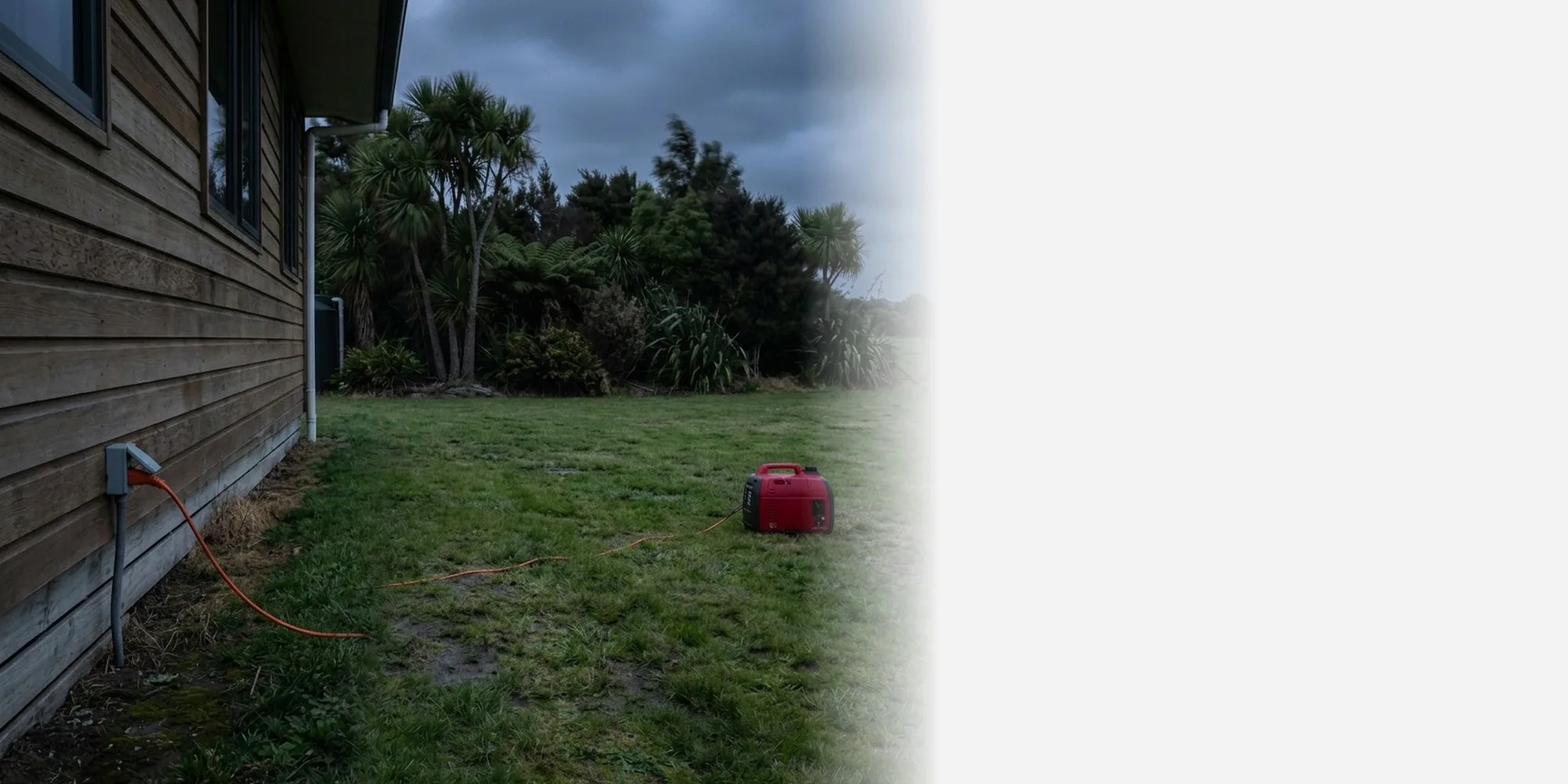
This is the simplest way, and it needs no electrical work. Follow your generator’s manual, run the generator outside, then plug each appliance into it with a suitable lead.
Use heavy-duty outdoor leads that suit the load, and uncoil them fully. Keep them out of puddles and away from where people walk. WorkSafe’s generator guidance adds that the total rating of what you plug in shouldn’t exceed the generator’s rating.
The catch is that leads only reach plug-in appliances. Your lights and a water pump wired into the switchboard can’t be powered this way. A lead through a window also means leaving that window open, often in the middle of a storm.
Don’t Do This
Can you plug a generator into a wall socket?
No. Some people make up a lead with a plug on both ends and push power back into a wall socket. Electricians call it a suicide lead, and the name fits.
There are two dangers. As soon as the generator runs, the pins on the free end are live. Touch them and you can get a serious shock.
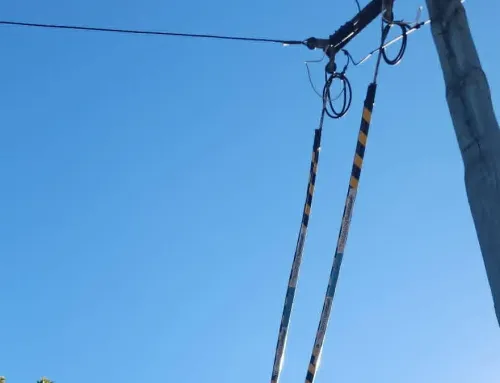
The bigger danger is outside your house. Without a changeover switch, nothing stops the generator’s output flowing back through your meter onto the street lines. That’s called back-feeding. Line crews fixing storm damage expect those lines to be dead. After Cyclone Gabrielle, some homes on Auckland’s west coast were still without power almost a week later. Crews were working on the lines the whole time.
Wiring a generator straight into the switchboard has the same problem. Only a proper changeover switch keeps the house and the network apart.
CALL 021 770 696 OR CLICK TO CONTACT US
Option 2
A generator inlet and changeover switch
This is the permanent fix. An electrician mounts a weatherproof inlet on the outside of the house and wires a changeover switch into the switchboard. Your generator lead plugs into the inlet, so the generator never comes inside.
The switch has a mains position and a generator position, with off in between. It cuts the house off from the grid before any generator power gets through. That’s what stops back-feeding.
Installing one counts as prescribed electrical work, so get a licensed electrician to do it and sign it off with a Certificate of Compliance. You can run the whole switchboard from the generator or only the circuits you care about. Most people choose the circuits for the fridge, the freezer, a few lights and the water pump. If your board is old or already full, it may need a switchboard upgrade first.
In a Power Cut
Using it in a power cut, step by step
Your electrician should show you the right order for your setup and label the switch. A typical routine looks like this:
- Wheel the generator outside, onto firm ground, well away from doors, windows and vents.
- Plug the generator lead into the inlet on the wall.
- Start the generator.
- Flip the changeover switch across to generator.
- Switch things on one at a time, starting with the fridge and the pump.
- When the power comes back, turn the switch back to mains, then stop the generator.
Always follow the steps your electrician gives you and your generator’s manual. Never run a generator indoors or in an internal garage. The exhaust contains carbon monoxide, which you can’t see or smell.
Sizing
What size generator do you need?
As a rough guide, add up the wattage of the appliances you’d run together. Then allow extra for the burst of power some appliances need to get going. Motors in fridges, freezers and pumps pull far more for a second or two as they start. A generator that only just covers the running load can cut out the moment one of them starts.
Getting it right means knowing what each appliance really draws and how your circuits are set up. Many people find that the hard part. Most portable generators can run a handful of essentials, not a whole house.
We can work out the size with you. Tell us what you want to keep running in a power cut, and we’ll suggest a generator that suits. We can supply the generator too, or check the one you’re looking at. Send us a message through our contact page or call 021 770 696.
Be Ready
Get ready before the next storm
Storms are when a generator earns its keep, and the time to sort the connection is before a storm arrives.
Have a practice run on a fine day, so the steps feel familiar. Store fresh fuel safely, away from the house. Check the lead is long enough to reach the inlet from a safe spot outside. For the official safety advice, read WorkSafe’s page on portable generators before you need it.
For lifestyle blocks, the pump is usually the top priority. The lifestyle block handbook from Auckland Emergency Management points out that an electric water pump won’t work when the power is out. Without it, there’s no running water in the house.
Next Step
Want your generator connected properly?
Leads can get you through a short outage. For anything longer, or for a lifestyle block with a pump, a permanent connection is the better answer. Our generator changeover switch page explains how the setup works.
Got a generator and want it wired in? We’ll check your switchboard and your generator, then talk through what you want to run. We work across Auckland from our base in Waitākere. Use our contact form and tell us roughly where you are and what generator you have, or call 021 770 696.
Totally Amped Electrical, EWRB-registered electricians, Auckland
General information only: this article describes typical Auckland residential electrical work and the rules as they stood at publication, not advice specific to your property. Requirements change, so confirm the current position with a licensed electrician before starting any work.
GENERATOR CONNECTION FAQS
Can I connect a generator without a changeover switch?
Only by plugging appliances straight into it. Feeding the house wiring takes a changeover switch fitted by an electrician, which separates the house from the grid first.
Can I plug the generator straight into my switchboard?
No. Wiring a generator into the board without a changeover switch can back-feed the street lines. The safe route is a proper inlet and switch, wired and signed off by a licensed electrician.
Do I need a Certificate of Compliance for a generator inlet?
Yes. It’s prescribed electrical work, so your electrician gives you a Certificate of Compliance when the job is finished. Keep it with your house paperwork.
Can I run the generator in the garage?
No. WorkSafe says a generator must never run in an indoor space where people are, and that includes an internal garage. Carbon monoxide from the exhaust can kill, and you won’t smell it.
What if I rent?
Talk to your landlord first. A generator connection is a permanent change to the wiring, so the owner has to agree to it. Until then, stick to leads plugged into the generator itself.