Tiger Tails on Power Lines
A plain-English guide for NZ homeowners
Your tradie says you need tiger tails before they’ll start. Here’s what they are, who installs them, what drives the price, and how to get them sorted before the scaffold goes up. We’re Totally Amped Electrical, West Auckland sparkies, and this is the guide we wish every homeowner had.
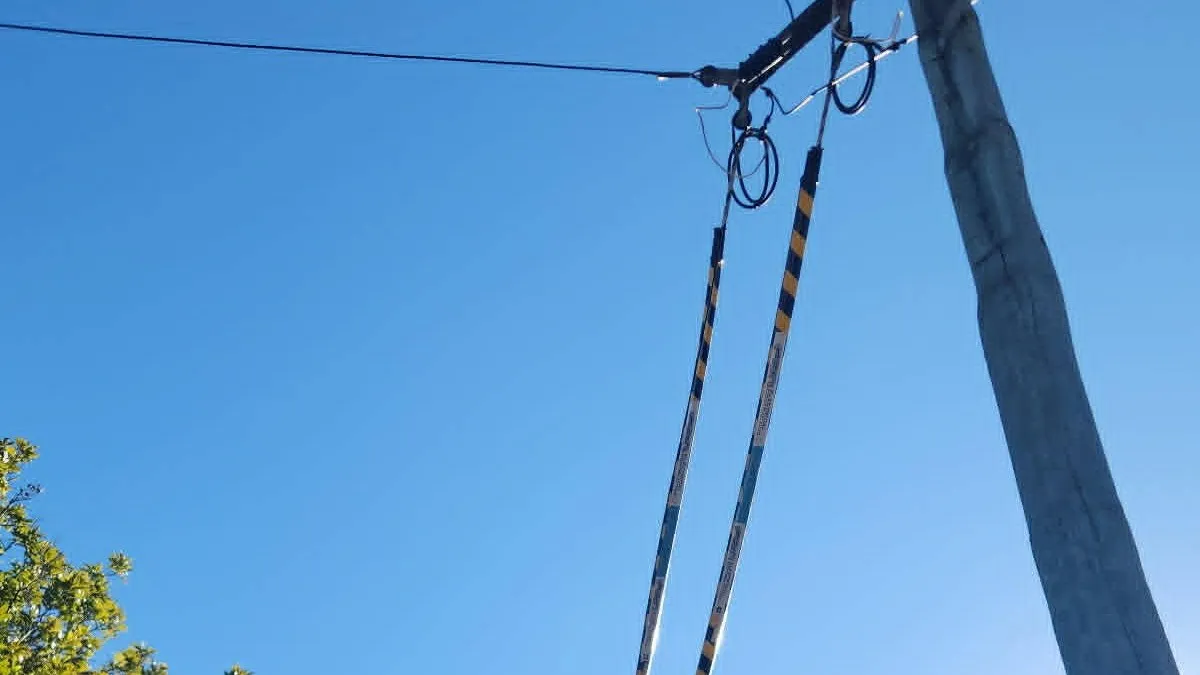
Your roofer, plumber or painter says you need tiger tails before they’ll start. Here’s what that means. Tiger tails (you’ll also hear them called power line sleeves, line covers or tiger sleeves) are black and yellow striped tubes fitted over the power lines around your house. They make the lines obvious and add a layer of protection so people working on your roof, scaffold or trees don’t accidentally touch a live conductor. They’re installed and removed by people qualified to work near live lines, not by your builder and not by you. In Auckland that’s where we come in: tell us what work you’ve got planned, and Totally Amped Electrical sorts the tiger tail power line sleeving, and the consent paperwork if your job needs it, before your tradie’s start date. Most jobs need about a week’s lead time, so book them as soon as your tradie mentions it.
“We have roofing repairs planned for our bungalow. The plumber requests tiger sleeve protection and a close approach consent. The plumber hopes to commence work next week.”
A real enquiry from our inbox, details removed
If you’ve received a message like that from your own tradie and have no idea what any of it means, this page is for you.
The Trigger
When Are Tiger Tails Required?
Whenever someone’s going to be working close to the power lines around your home. The classic triggers are roof repairs and repaints, scaffolding going up, house washing, gutter work, and tree trimming near the service line (the line that runs from the street to your house). Your tradie usually calls it: they’ll look at the job, see the lines inside their working area, and tell you to get sleeves on before they start. They’re not being precious. WorkSafe’s guidance on working near low voltage overhead lines is blunt about it: every overhead line gets treated as live, all the time, and there are minimum distances workers must keep from them. Tiger tails are part of how a worksite manages that risk.
The Big Misconception
Do Tiger Tails Insulate Power Lines?
The most important thing on this page: no, not in a way you can rely on. Tiger tails are a visual warning and a layer of mechanical protection. They make the line impossible to miss and they help if a ladder or scaffold tube brushes against it. They do not turn a live line into a safe one, and nobody gets to touch a sleeved line. The safe-distance rules in NZECP 34, New Zealand’s electrical safe-distance code, still apply with the sleeves on. Think of them like a hi-vis vest for your power line: it makes the hazard obvious, it doesn’t make the hazard go away.
Want the deeper dive on the product itself? We break down what power line covers, sleeves and wraps actually do, including why the hardware store versions are a different thing entirely.
CALL 021 770 696 OR CLICK TO CONTACT US
Budgeting
What Does Tiger Tail Installation Cost In NZ?
There’s no flat answer, because the price hangs on a few things: whether the lines are Vector’s network lines or your own private service line, how many spans need sleeving, how long the sleeves stay up (a weekend repaint and a three-month reroof are different jobs), and whether a close approach consent is needed on top. There is a paperwork side too: what Vector needs before issuing a consent depends on the type of work, and scaffold jobs have their own requirements, so two similar-looking houses can be quite different jobs on paper. Getting it wrong is the expensive version, since failure to comply with NZECP 34 can lead to prosecution by WorkSafe. The honest way to find out is a quote against your actual job, which costs nothing: tell us the address, the work being done, and the start date.
Who To Ring
Who Installs Tiger Tails: Vector Or An Electrician?
This is where most homeowners get stuck, because the answer is “it depends on whose lines they are.” In Auckland, Vector owns the network lines in the street, while the service line to your house may be yours. Work near Vector’s network generally goes through Vector’s process. The practical shortcut: you don’t have to figure this out yourself. We deal with this split constantly, so one enquiry to an electrician who does tiger tail work means someone who knows the system works out which side of the line your job sits on, and arranges the right people for each part.
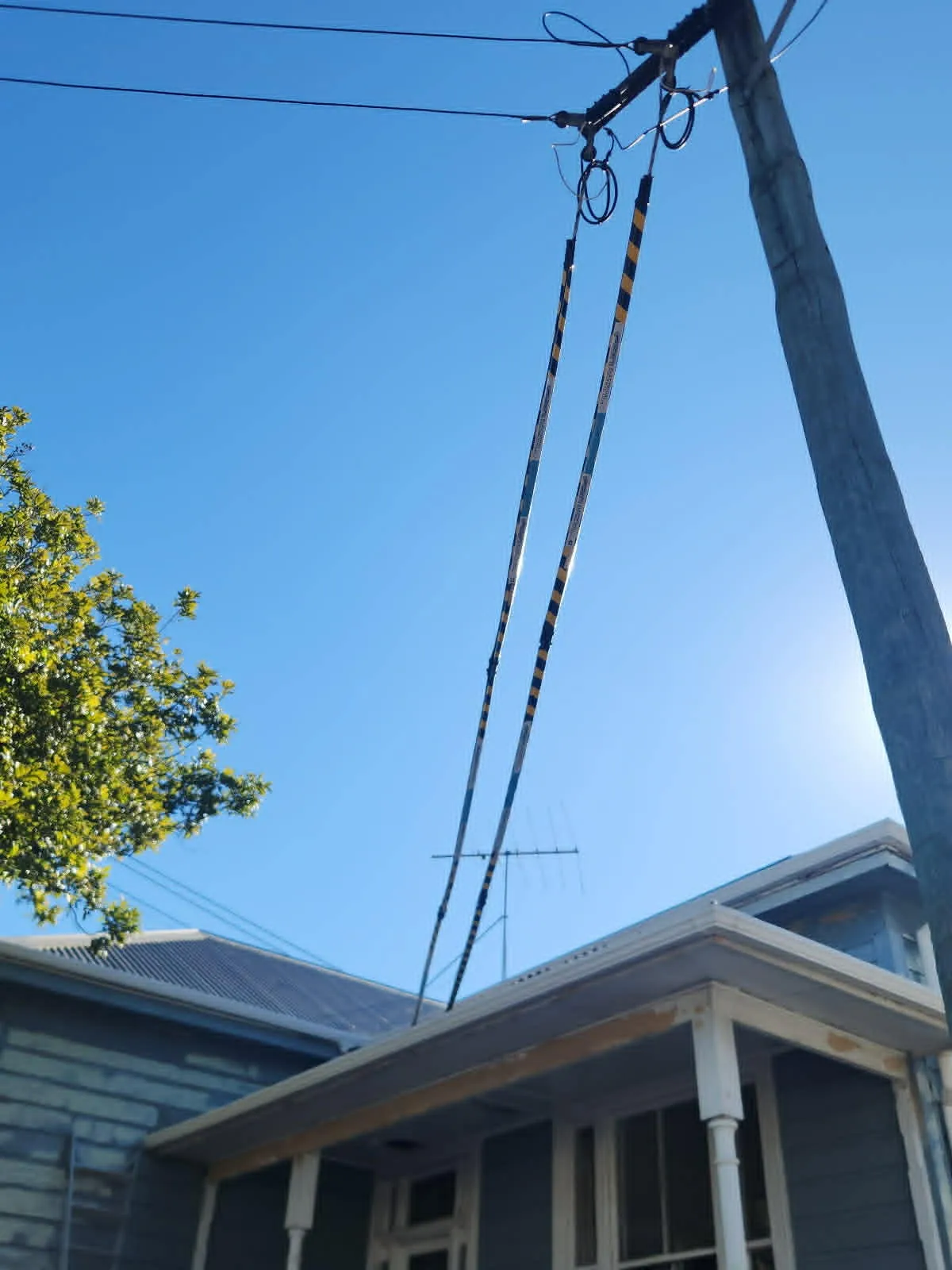
Tiger tails on the service line at a recent Auckland job
The Other Half
What Is A Close Approach Consent, And Do I Need One Too?
You might have noticed the enquiry above asked for two things: tiger sleeves and a close approach consent. They’re related but different. The sleeves are physical protection on the line. A close approach consent is permission from the lines company for work to happen closer to the network than the standard safe distances allow. Vector requires a close approach consent for work within four metres of overhead lines, which catches a lot of roof and scaffold jobs by default. Plenty of jobs need both: sleeves on the line, consent for the crew to work inside the normal clearance. Your tradie will usually know if their work plan needs the consent. What they often can’t do is arrange it for you, since it relates to your property. That’s the part we handle alongside the install.
Timing
When Should I Book, And How Long Can They Stay Up?
Book the sleeves the same week you book the tradie. The pattern we see over and over: the scaffold is half organised, the painter has a start date, and the lines only come up a week out, which is exactly the timeline in the enquiry above. A week is usually workable. A day is sometimes not. There is a use-by date on the paperwork as well: a close approach consent is valid for 28 days from issue, so the consent and the work need to line up. The sleeves themselves can stay up for the life of the job, and the booking covers both visits: one to fit them before work starts, one to take them down when it’s done. If your job runs long, that’s fine, just tell whoever installed them.
The Common Neighbour
Who Is Responsible For Trees Near Power Lines?
A common neighbour to this whole topic. If a tree on your property is growing toward power lines, keeping it clear is the tree owner’s responsibility under the Electricity (Hazards from Trees) Regulations 2003, not the lines company’s, and Vector’s tree management rules set out who is allowed to do the cutting once branches get close to the network. If your tiger tail enquiry started because of tree work, mention it, because the answer may involve sleeves, a qualified arborist, and the lines company in some combination.
Next Step
Got A Tradie Waiting On Tiger Tails?
Use our contact form with the address, the work planned, and the start date, and we’ll come back to you with what your job needs. The sleeves go up, your tradie starts on time, and nobody has to learn the electricity regulations on a deadline.
Totally Amped Electrical, EWRB-registered electricians, West Auckland
General information only: this article describes typical Auckland residential electrical work and the rules as they stood at publication, not advice specific to your property. Requirements change, so confirm the current position with a licensed electrician before starting any work.
This article is general information only and is not advice about your specific property or job. Safe-distance rules and consent requirements depend on the site and the work planned, so confirm the details for your own situation before any work starts.