Power Line Covers, Sleeves And Wraps
What tiger tails do, and what they don’t
Same product, five different names. None of them mean the line is safe to touch. Here’s what the covers actually do.
The Short Answer
What Do The Covers On Power Lines Actually Do?
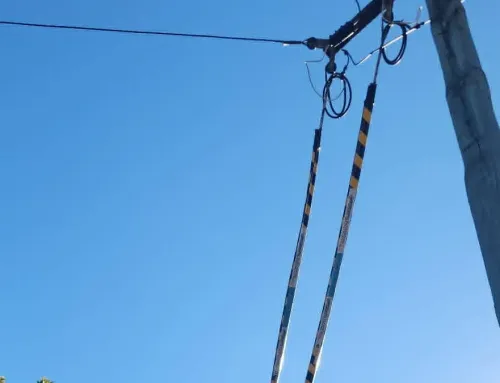
Power line covers, sleeves, wraps, line guards and tiger tails are all the same thing: striped split tubes that clip over an overhead line to make it obvious and to soften an accidental brush against it. Under AS 4202 they carry a low voltage rating of around 650 volts, and that is where their powers end. A covered line is still a live line. The covers exist to warn whoever is working nearby, whether that’s a painter on a ladder or a scaffold crew building past the service line, and to buy a margin of protection if a tool brushes the conductor. They do not insulate the line. They do not make it safe to touch. The legal minimum approach distances still apply. And in New Zealand they’re installed by competent electrical workers, not bought off a shelf.
“Never assume that an existing line covering is insulated.”
WorkSafe New Zealand, guidance on working near low voltage overhead electric lines
Terminology
One Product, Five Names
Search for this product and you’ll find it under a pile of different names. The trade calls them tiger tails, after the black and yellow stripes. WorkSafe’s guidance defines them as a line covering that complies with AS 4202 and “may provide temporary electrical insulation, mechanical protection, or visual warning” of an overhead line. Suppliers list the same thing as line guards. Homeowners tend to say power line covers, sleeves or wraps, which is why half the search results for those words show floor cable protectors from the hardware store instead of anything that goes on an overhead line.
Whatever you call them, the product is a split synthetic tube, supplied in sections that clip over the conductor one after another by someone trained to do it. We wrote a separate guide on when a homeowner actually needs them. This article is about what the things actually do, because that’s where most people get it wrong.
The Misconception
Do Tiger Tails Insulate Power Lines?
No, and this is the misconception that gets people hurt. Tiger tails carry a brush contact rating of about 650 volts under AS 4202. That’s a buffer against a paintbrush or a length of timber glancing off the line. It is not insulation you can lean on, grab, or rest a ladder against.
WorkSafe’s guidance on working near low voltage overhead lines is blunt about it: “Never assume that an existing line covering is insulated.” Covers weather. UV eats them. A covering that looked fine when it went up two jobs ago may protect nobody today. The rule that keeps you alive is simple: treat every line as live, covered or not, and keep the required distance regardless.
CALL 021 770 696 OR CLICK TO CONTACT US
When They Go On
When Does A Power Line Need Covers Installed?
The trigger is work happening close to a line. Painting the weatherboards under the service connection. Re-roofing. Scaffolding going up beside the house. An arborist working a tree that’s grown around the span. WorkSafe’s guide sets the zones for low voltage lines: closer than half a metre and the supply has to be isolated before work starts, while work between half a metre and four metres needs written consent before it goes ahead. Tiger tails are one of the control measures that make that consented work safer.
There’s a coverage rule too. The covers should run the full length of the work area and carry on at least two metres past it, so nobody runs out of protection at the edge of the scaffold. Wellington Electricity’s power line safety page notes a private contractor can sleeve a service line where the work itself stays at least half a metre clear. Anything closer than that and sleeving is the wrong tool; the line comes off instead.
Installation
Who Is Allowed To Install Tiger Tails?
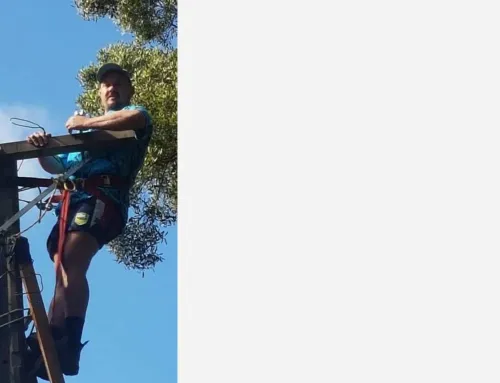
A competent electrical worker, or someone under their direct supervision. That’s WorkSafe’s requirement, and it exists because installing the covers means working right up against a live conductor, which is precisely the thing everyone else on site is being told not to do.
This is also the answer to the hardware store question. The cable covers and wraps sold at retail are for cables on the ground: protecting an extension lead running across a driveway, or tidying wires behind a desk. Nothing in that aisle is rated to go over a live overhead line, and even the real thing wouldn’t help you, because the product was never the hard part. The install is. If a line at your place needs sleeving, that’s a job we do, and it starts with an assessment of the span rather than a purchase order.
The Real Job
Why Sleeving A Line Is A Bigger Job Than It Looks
There’s a well known Reddit thread where an Auckland homeowner asks why it costs so much to “slip a sleeve of plastic over a line”. Fair question. The plastic is genuinely cheap. The plastic was never the job.
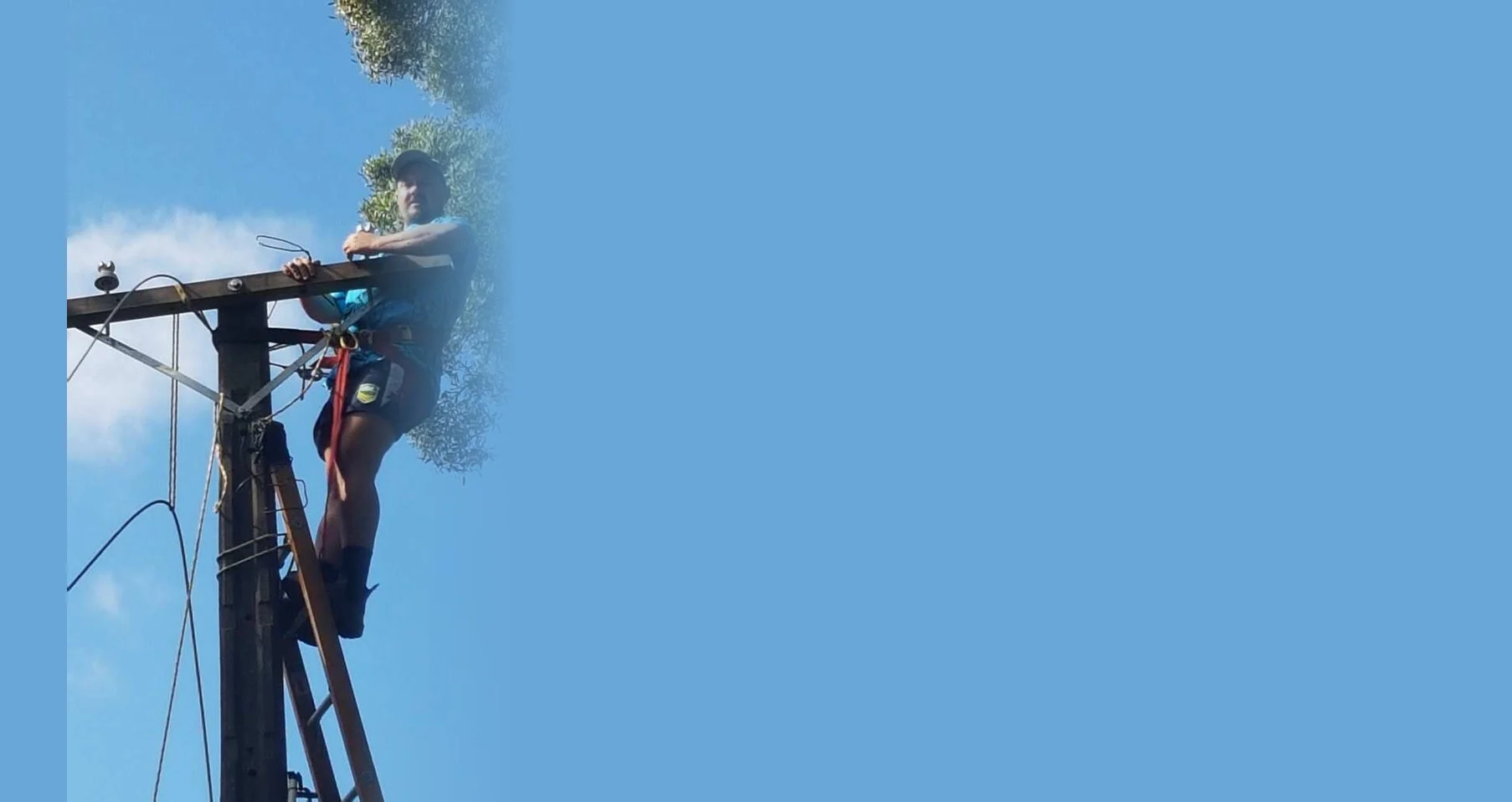
The job is live line work. The installer is handling covers directly onto an energised conductor, which takes training, insulated gear that gets inspected and maintained to standard, and a method that keeps the installer inside the rules of NZECP 34, the code covering safe distances from live lines. Then the whole exercise repeats in reverse, because tiger tails are temporary and come off when the work is done. Two visits, a trained person on each one, and equipment that has to be certified for the worst moment of the worst day. That’s what the price of “a bit of plastic” is actually buying.
Next Steps
Not Sure What Your Line Needs?
If there’s painting, roofing or scaffolding coming up at your place and an overhead line in the picture, start with our tiger tails homeowners guide, or go straight to the power line sleeving service page for the how and when. We install and remove tiger tails across Auckland from our base in Waitākere. Reading this from further afield? Your local lines company can point you to an approved installer in your region.
Got a job coming up near a power line? Call Totally Amped Electrical on 021 770 696 or get in touch and we’ll take a look at the span before anyone climbs a ladder.
Totally Amped Electrical, EWRB-registered electricians, West Auckland
POWER LINE COVERS FAQs
Are tiger tails insulated?
Only in a limited, temporary way. They carry a brush contact rating of around 650 volts under AS 4202, which softens a glancing touch from a tool. WorkSafe’s advice is to never assume a line covering is insulated, because wear and UV degrade the protection. Treat a covered line exactly as you would a bare one.
Can you touch a power line once covers are on it?
No. The line stays live underneath and the covers are not rated for deliberate contact. Minimum approach distances still apply with tiger tails fitted. What changes is visibility: everyone on site can see exactly where the hazard runs.
How long do tiger tails stay on a line?
For the duration of the job they were installed for. They’re a temporary measure, so the usual pattern is install before the painting or scaffolding starts, then removal once the work wraps up. They aren’t designed to live on a line permanently.
Do tiger tails work on high voltage lines?
The covers described here are rated for low voltage lines, like the service line from the street to your house. High voltage lines are a different regime with a four metre default clearance, and any work near them goes through the lines company under a close approach consent.
Do I still need to keep my distance once covers are installed?
Yes. The minimum approach distances in NZECP 34 apply whether a line is covered or not. Tiger tails add visibility and a margin for accidental contact. They don’t shrink the rules.