
Commercial Electricians in Auckland
Fit-outs, LED retrofits, three-phase upgrades, and planned maintenance for Auckland retail, office, hospitality, and industrial.
Fitting out a new shop. Rewiring a restaurant kitchen for three-phase. Upgrading thirty tired fluorescents to LED on a weekend. Adding EV chargers in a warehouse carpark without blowing the site supply. Getting a site’s portable appliance testing done before somebody asks for the records. We’ve been doing commercial electrical for Auckland businesses, landlords, and shopfit builders since 2009. That takes in the industrial premises along Rosebank Road, with commercial electrical work in Avondale. That includes the wineries and growers further west, where we handle commercial electrical in Kumeu. Britomart retail. Ponsonby hospitality. East Tamaki industrial. Takapuna offices. Work that gets done when we said it would, signed off to the right standard, and documented so your insurer, your Council auditor, and your next tenant all see the paper trail.
CALL 021 770 696 OR CLICK TO CONTACT US
Who We Work With
Commercial Work Done Properly, on Time, and Documented
Commercial electrical is a different animal to residential. We handle it across West Auckland, including commercial electrical in the New Lynn town centre. The tenant needs to open on a specific Tuesday. The landlord needs the BWOF paperwork clean. The shopfit joiner needs outlet positions confirmed a week before they order joinery. The insurer wants a Certificate of Compliance with the right signatures in the right places. We work with business owners, landlords, property managers, developers, shop fitters, and project managers. Everyone gets the same thing: a scope that’s clear, a price that doesn’t drift, a timeline we can actually hold, and paperwork your auditor recognises.
What We Handle
Retail and Shop Fit-Outs
Retail fit-outs are our bread and butter. Ponsonby, K Road, Newmarket, Britomart, Queen Street, suburban malls. Shop fitout or retail fit out, the electrical scope is the same. Sales counter power with EFTPOS on its own surge-protected circuit. Feature and display lighting with dimming. Back-of-house and stockroom power. Signage circuits. Commercial security installations including CCTV on their own battery-backed circuits. All designed in lockstep with the shopfit joiner so outlet positions line up with final joinery. Retail spaces also need commercial air conditioning circuits planned early so the splits go where they need to without clashing with signage or ducting.
Office Fit-Outs and Tenancy Wiring
Offices are the other half of the CBD and North Shore market, and an office fit out has changed a lot in the last few years. Office fitout work now starts with how the floor gets used. Under-floor power boxes for hot-desk floors. Above-ceiling drops for fixed-desk tenancies. Boardroom AV power on its own circuit, kept separate from the display. Meeting-room power with Category 6a data if the job needs it. For larger tenancies, structured data cabling is best planned alongside the power layout so cable trays and containment run together. Kitchenette circuits for the dishwasher, microwave, fridge, and the office coffee machine that pulls more current than anyone expects. Copier rooms, IT racks, UPS circuits. We work around the tenant’s existing staff where we can, and flip to evenings and weekends where we have to.
Hospitality, Commercial Kitchens, and Bars
Hospitality is where things get technical. Three-phase commercial ovens, fryers, dishwashers, each on their own circuit so a single trip doesn’t knock out the whole kitchen. Walk-in cool rooms and chillers with their compressors on dedicated circuits. We handle the commercial HVAC electrical side so your refrigeration contractor can focus on the gas. Grease-filter extraction motor wiring, including the pressure-switch interlock so the motor shuts down if the filter clogs. Bar glasswashers, pokies on isolated circuits to keep electrical noise off the gaming systems, mood lighting on dimmers, PA amps on surge-protected circuits separate from the bar lights. Emergency lighting in the kitchen because NZS 2293 requires it even though most people forget that bit.
Warehouse and Industrial Electrical Work
Then there’s warehouse and light industrial. East Tamaki, Penrose, Panmure, Rosebank Road. High-bay LED replacements on occupancy sensors so the lights aren’t burning kilowatts when nobody’s on the floor. Three-phase circuits for lathes, CNC, welders, compressors, whatever machines the tenant runs. Forklift charging bays. Loading-dock lighting on motion sensors. EV charging infrastructure sized for fleet operations, with load management so two 22kW chargers running concurrently don’t exceed the site supply. Every one of these is a full-scope commercial electrical installations job, not just plugging in an outlet.
Schools, PTEs, and Training Facilities
Training facilities sit in their own category. PTE classrooms. Secondary school labs. Trade workshops. Smart-board circuits with Cat6a data. Lecture theatre AV with dimming and UPS-backed projection. Science lab fume hoods and bench power. Workshop three-phase for lathes, drills, welding stations, each with proper emergency-stop interlock so one button kills power to everything at once.
Commercial LED Lighting Upgrades
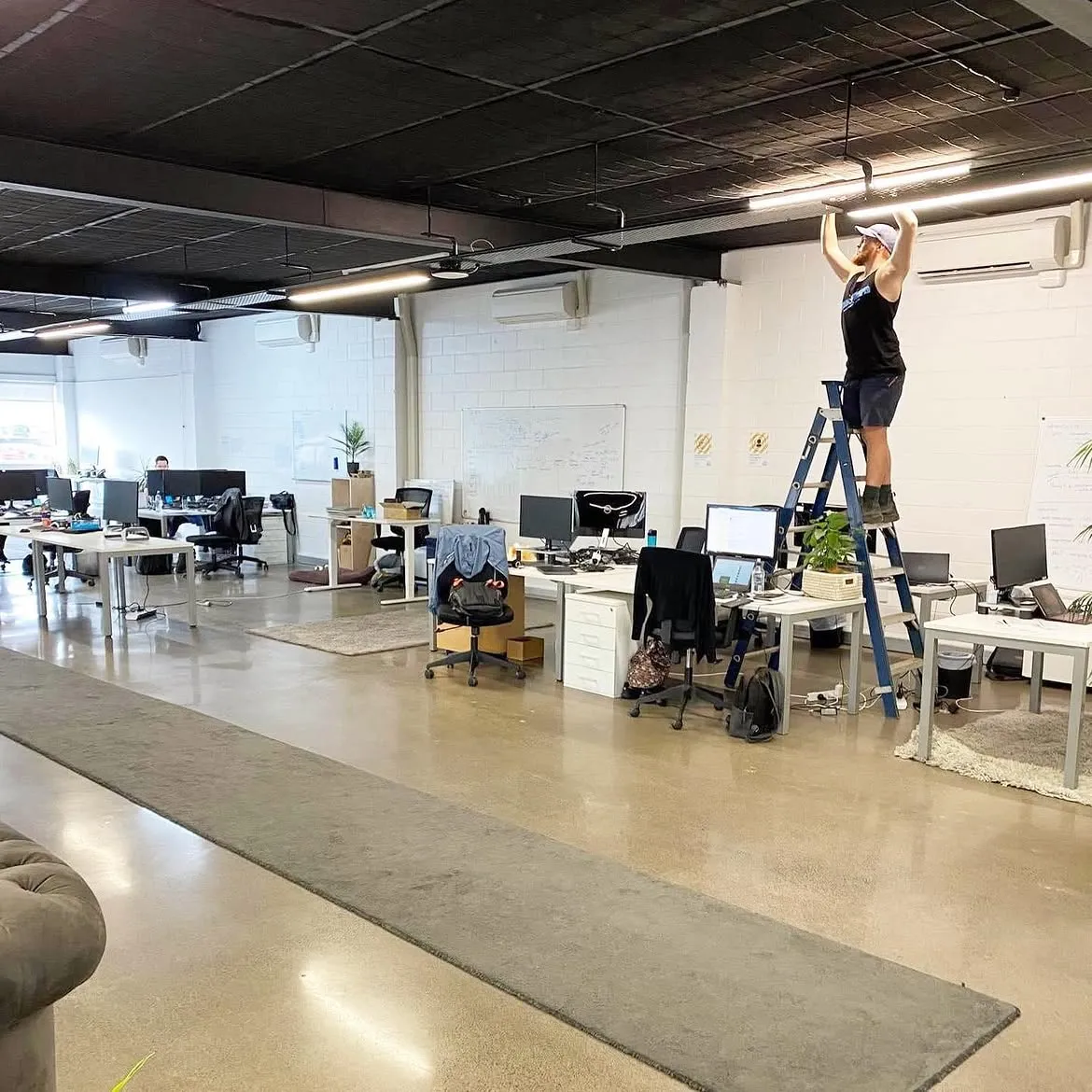
If you’re looking for the easiest win in a commercial building, it’s usually the lighting. Older Auckland commercial stock still runs T5 or T8 fluorescent. Swap them for LED downlight retrofits or LED panel replacements and the power draw drops by two-thirds overnight. Add occupancy sensors and daylight-harvesting photocells and you pick up another 30 to 50 percent in the hours nobody’s actually looking. Payback in 3 to 5 years is typical, sometimes quicker. And while the board’s open anyway, we upgrade the emergency fittings to current NZS 2293 in the same visit.
Commercial Electrical Maintenance and Compliance
The paperwork side? That’s ongoing compliance, plus the electrical-safety obligations WorkSafe expects commercial operators to stay on top of. Switchboard thermal imaging for loose connections and hotspots. Test and tag for portable appliances under AS/NZS 3760. Fixed-wiring verification under AS/NZS 3019. Every visit generates a certificate your building manager can hand straight to the insurer, the Council compliance officer, or the next tenant doing due diligence.
That work lands better on a schedule than a panic. Commercial electrical maintenance done properly puts the thermal scan, the test and tag round, and the fixed-wiring verification in one planned visit instead of three, and keeps the compliance file current. We run it as an ongoing planned maintenance programme for Auckland sites that would rather budget for it than be surprised.
Where We Work
Commercial Electricians Across Auckland
Auckland’s commercial buildings age by precinct. CBD office towers on Queen Street, Victoria Street, and K Road are mostly 1970s and 80s stock. Limited cable-tray capacity. Aging main switchboards. Some still single-phase to upper floors. Tenant fit-outs here are as much about working around what’s already in the ceiling as they are about installing anything new. Heritage-listed buildings (a handful in the CBD still) add another layer of restrictions on what you can cut into and where cable can run.
Britomart, Commercial Bay, the newer wharf developments are the opposite. Good base-build infrastructure, proper three-phase supply, under-floor power boxes ready for hot-desk offices, building-wide data backbones. Fit-outs here move fast. Multiple tenants fitting out simultaneously. Coordination with the landlord’s building management and concurrent trades is the whole game.
Ponsonby, Kingsland, Grey Lynn, and K Road are hospitality country. Cafes, restaurants, bars, boutique retail in heritage or converted buildings. Three-phase supply is the constant question. A lot of older buildings don’t have it, and getting Vector to lift the cable from the street is an 8 to 12 week lead-time conversation that needs to happen before the lease is signed, not after the builder’s already on site. We do that supply-availability check on day one of every hospitality project.
East Tamaki, Penrose, Panmure, Rosebank Road in Avondale are industrial. Warehouses and light industrial units from the 80s, 90s, and 2000s. Good electrical bones for the most part, but aging distribution boards and ground-level switchboards that flooded in the 2023 Anniversary weather events are still surfacing issues. EV charging for fleet operators is the current growth area. Logistics, courier, vehicle rental fleets are putting in 4 to 12 chargers at a time with load management to keep site demand under control.
West Auckland retail parks (Lincoln Road, Westgate) and North Shore commercial (Wairau Valley, Albany, Takapuna) round out the map. Retail parks turn over tenants every 3 to 5 years, so fit-out work is steady. Albany’s growth has outpaced some of the Vector supply capacity, so supply upgrades there need more lead time than they used to. For greenfield commercial builds in these growth corridors, development electrical reticulation needs to be on the programme before foundations go in.
Our Process
What to Expect
A commercial project is a four-stage conversation.
Why Businesses Stay With Us
Why Choose Totally Amped Electrical
Trading since 2009. Every electrician on the team is fully qualified and registered with the EWRB (the Electrical Workers Registration Board, which licenses sparkies in New Zealand). Every job meets the relevant NZ standards: NZS 3100 for wiring and AS/NZS 3019 for fixed-wiring verification. We know what Council inspectors and commercial insurers are actually looking for because we’ve written the paperwork for both.
We work after hours when the project needs it, and the schedule gets set up front so there’s no surprise premium in the week before the tenant’s opening. Clear scope. Written quote. Honest timeline. If we open a ceiling space and find something unexpected, we tell you before we do anything about it. If we can fix a small thing inside twenty minutes, we just fix it. That’s what a good sparkie does.
COMMERCIAL ELECTRICIANS FAQs
Do you work after hours so we don’t have to shut down?
Yes. Retail fit-outs and lighting retrofits often run overnight, 10pm to 6am, so the shop can trade normally during the day. Office fit-outs run weeknight evenings or Saturdays. Hospitality work lines up with closure nights (typically Monday or Tuesday in Auckland). After-hours work carries a rate loading, but it’s usually cheaper than closing the business for the duration of the job. We plan the schedule with you up front so there are no surprises on the invoice.
How does landlord versus tenant electrical responsibility split work?
The landlord usually owns the main switchboard, the submains to the leased space, common-area lighting, and BWOF-covered building-wide systems. The tenant usually owns everything downstream from the distribution board into their fit-out: circuits, outlets, fittings, specialist equipment, and the tenant’s own emergency lighting. Leases vary, especially around kitchenettes, meeting rooms, and exterior signage. We read the electrical scope in your lease before we quote, flag any ambiguities, and talk to the landlord’s representative if something needs clarifying. Saves a lot of arguments at make-good time.
Do I need Council consent for a commercial fit-out?
Sometimes yes, sometimes no. New cable penetrations through fire-rated walls almost always do. Major supply changes (upgrading the main supply or adding three-phase) usually do. Like-for-like circuit replacement and adding outlets within existing cable capacity often don’t. We check the scope against Auckland Council’s consent exemptions on day one and tell you which route applies. If consent is needed, we coordinate it. The worst outcome is finding out you needed consent after the BWOF auditor spots an uncertified fire-wall penetration eighteen months later.
Can you handle three-phase supply upgrades with Vector?
Yes, and the earlier the better. Most commercial kitchens, workshops, and multi-charger EV sites need three-phase. If the building doesn’t have it, Vector takes 8 to 16 weeks to lift the supply from the street depending on distance from the three-phase backbone and their upgrade queue. We do a supply check on the first site visit, apply to Vector if an upgrade is needed, and keep the timeline visible. We also handle the internal switchboard side so when the supply arrives, everything’s ready to connect.
What compliance documentation do I get at the end of the job?
A full pack. Certificate of Compliance for all electrical work, signed and dated. Test and inspection records for insulation resistance, earth continuity, RCD trip times, and earth fault loop impedance where relevant. Switchboard thermal imaging reports if that’s part of the scope. Test-and-tag records under AS/NZS 3760 for portable appliances. It all comes in one digital file, emailed to you and your building manager, ready for the insurer, the Council compliance officer, the BWOF auditor, or the next tenant doing due diligence.
OUR SUPPLIERS







DON’T JUST TAKE OUR WORD FOR IT
Reviews from our customers
GET IN TOUCH
For quality electrical work from new builds to renovations, repairs, our customers appreciate our hard work and efficiency and our consistent performance delivering projects on time, within budget with enthusiasm and professionalism.
If you are undertaking a new build or renovation, or need an experienced electrician to carry out work on your property, contact us for quality workmanship within your budget. Get in touch with us today to talk about how we can help you with your next project.